Where Tai Chi Began and What its Roots Mean to You
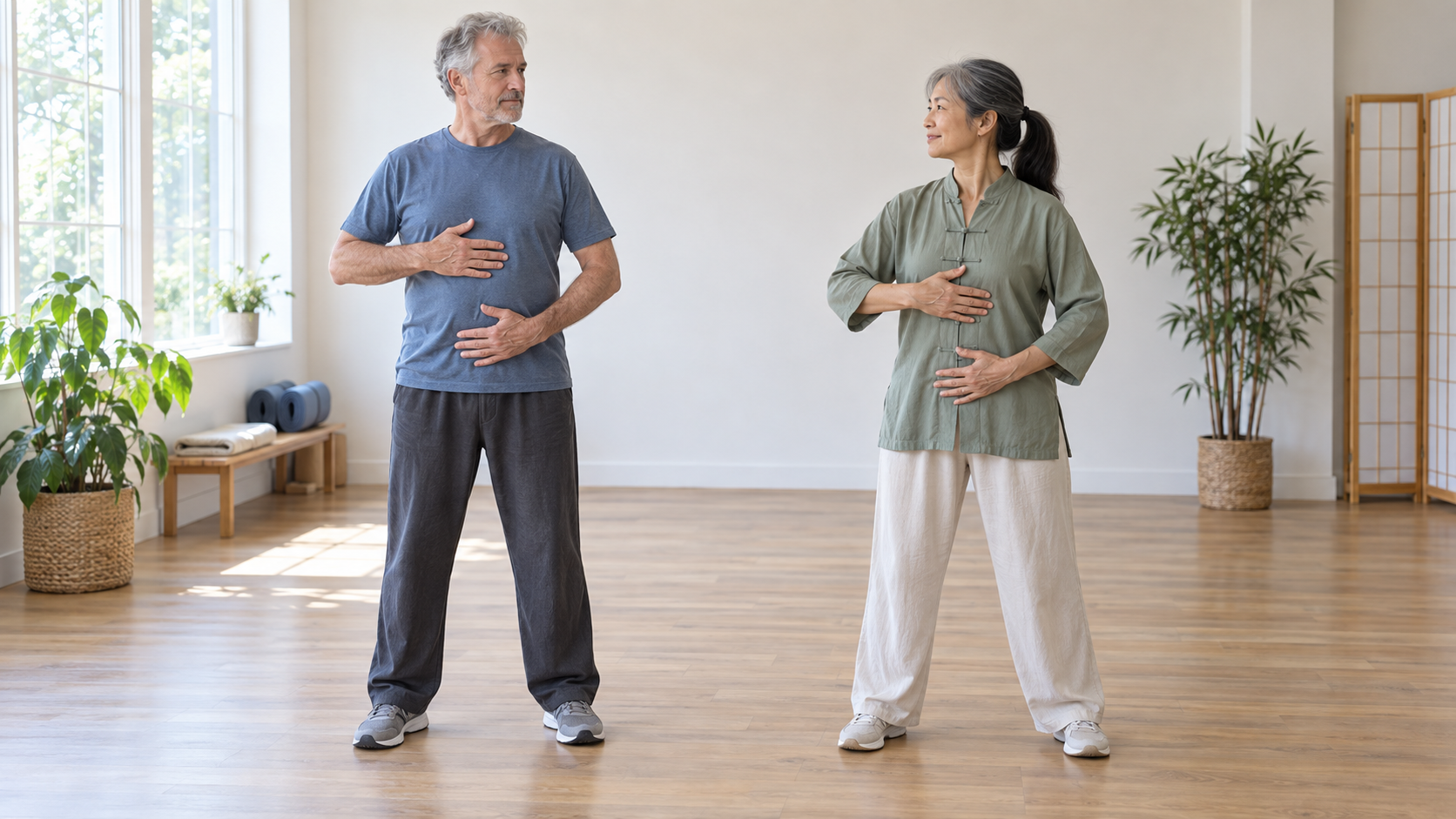
When you're able, watch someone carry a full bowl of soup across a room.
They slow down. Their steps become deliberate. They notice their hands, their footing, and the turn around the table. Without giving it much thought, they become more mindful, coordinating their whole body as to avoid spilling the soup.
That kind of moment offers a useful introduction to Tai Chi. Behind its flowing movements is a practical lesson in how we stand, shift, turn, and respond. Its history helps explain why moving slowly can involve more than simply slowing down.
A Martial Art With Thoughtful Foundations
UNESCO traces the practice to the mid-seventeenth century in Wenxian County, Henan Province, China, but its philosophical roots reach further back.
Tai Chi developed as a unified philosophy for living; the phrase, 'Tai Chi' means the 'The Supreme Ultimate,' an explanation for everything. 'Tai Chi Chuan,' in fact, can be roughly translated into 'The Ultimate Supreme Fist.' But its origins aren't about defeating an opponent, or smugly embracing a superior lifestyle.
Tai Chi explores the relationship between opposing but connected qualities: stillness and movement, yielding and firmness, opening and closing, female and male. That duality of things -- often called yin and yang -- reflect an understanding of change found through observing nature.
In practicing Tai Chi, you can feel that relationship when one leg gradually accepts your weight while the other empties of weight. There is strength involved, but also an ability to release unnecessary effort.
That makes Tai Chi's martial history even less surprising. Learning to move with control, maintain your footing, and respond without stiffening has obvious value in self-defense. Those same skills also have a place in everyday movement, and you don't need to be a black belt in anything to receive its benefits.
Why its Name Appears in Different Forms
You may see the phrase Tai Chi, Tai Chi Chuan, or Taijiquan, but these terms usually refer to the same thing rather than separate kinds of exercise.
Taijiquan uses the modern Pinyin spelling system for Chinese. Tai Chi Chuan is an older, familiar English rendering, whereas Tai Chi is the everyday shortened name.
You don’t need to remember the spelling systems to take a lesson. They simply explain why the same practice arrives wearing different labels.
Bringing Tai Chi Into Your life
With its emphasis on coordinated movement, attention to the world around you, and calm breathing remains central, over time, Tai Chi became widely practiced for health and relaxation.
For someone new to Tai Chi, that might mean learning a small turn without lifting the shoulders or deeply bending the knees. Movements can be adapted to your comfort and ability. There is no requirement to arrive flexible.
Research suggests Tai Chi may help with balance and the pain and stiffness of knee osteoarthritis. Progress varies, and significant pain, recent injury, or serious balance difficulties are worth discussing with a healthcare professional before beginning. But for today, here's a practical technique.
1. Sit comfortably in a firm chair with your feet supported.
2. Let your hands rest on your thighs, soften your shoulders, and notice three ordinary breaths without forcing them.
3. Imagine your breathing a bit like walking with a bowl of soup. You don't want to burn your hands. You don't want to make a mess on the carpet. You want to focus on deep breathing, air moving in and out of your lungs, the sensations in your extremities, your balance, and the feeling of calmness, control.
It's not a complete Tai Chi lesson but it is a small introduction to the attention that gives the movements their purpose.
Serenity Yoga & Tai Chi LLC can explain how you might apply Tai Chi principles at a manageable pace. Ask us how.
R