Give Your Morning a Little Room to Breathe
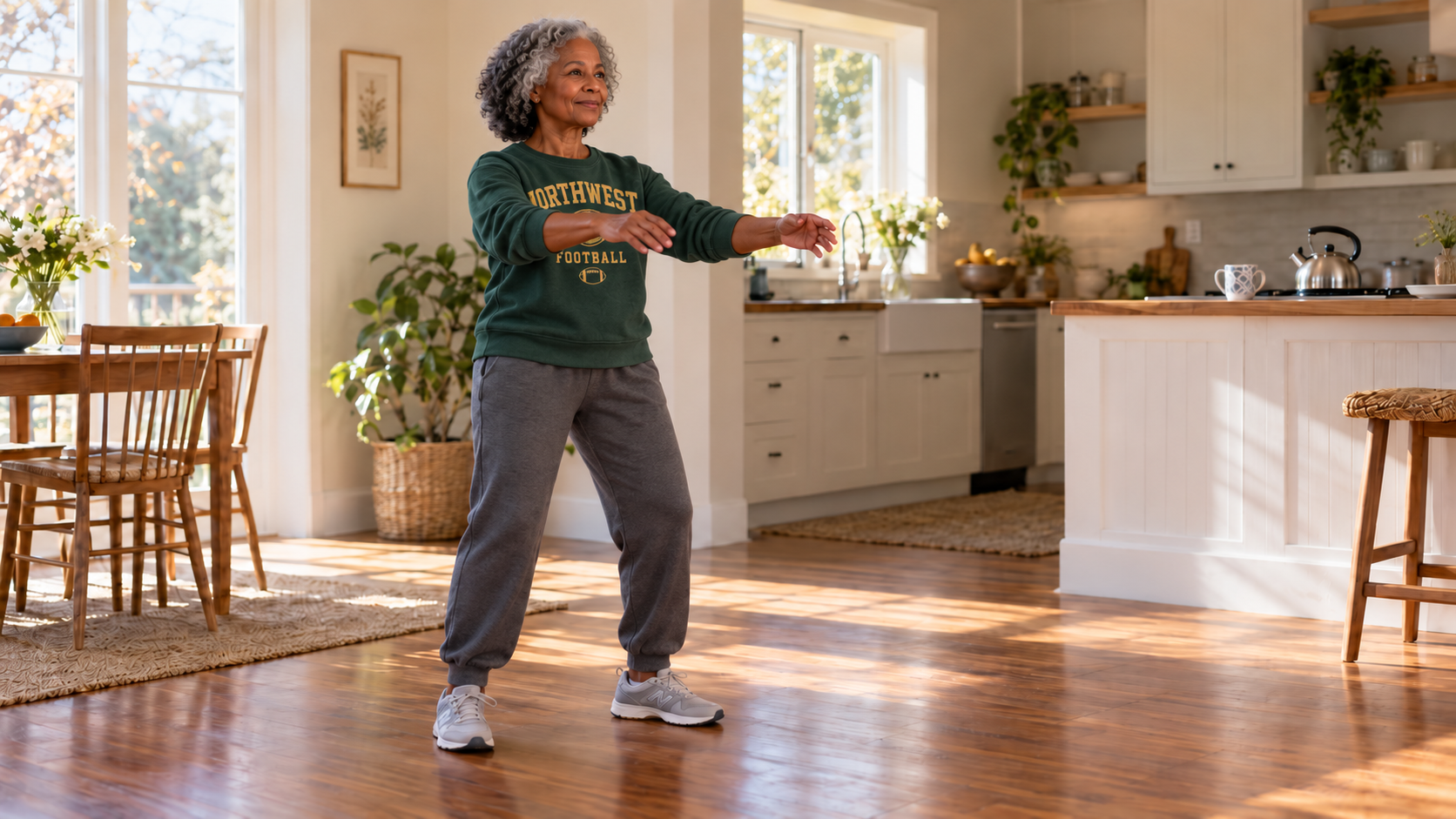
The kettle's warming, and you’re already thinking about the afternoon appointment, the laundry, and whether there’s enough milk in the fridge. Yes, Monkeymind. Meanwhile, your shoulders have crept toward your ears. Your lower back tenses. You haven’t left the kitchen, but the day already feels rushed and hurried.
A few minutes of Tai Chi can offer a gentler way to move into that morning. Still, there’s no need to turn it into another task to finish before breakfast. Think of it as a little time for yourself to notice how you feel before everything else asks for your attention.
Tai Chi combines slow, flowing movements with attention to breathing and posture. With regular practice, it may support balance and well-being, though benefits vary and develop over time.
What that looks like in everyday life is quite ordinary. Your feet meet the floor. Your arms move through a comfortable range. You notice that you’re holding your breath, then let it return to its natural rhythm. There’s something specific to pay attention to besides the list running through your head.
Imagine a morning when you’ve slept awkwardly and feel reluctant to move. During a short practice with Tai Chi, you begin with small arm movements, keeping your hands below shoulder height. As you move, you notice your jaw is tight. You let it soften. When your thoughts wander to an unfinished chore, you bring your attention back to the movement.
You might still feel stiff afterward, but you’ve given yourself a few minutes to move without rushing and to notice tension you might otherwise carry into the day.
That’s a useful starting point, especially if exercise has begun to feel demanding. You don’t need to arrive flexible or coordinated. Learning Tai Chi postures and forms takes repetition, and it’s reasonable to feel a little unsure at first. An instructor can help you find a comfortable stance, adjust the size of a movement, and explore seated options when appropriate.
The movements also give you a chance to pay attention to everyday mechanics. Slowly shifting weight between your feet asks you to notice where your weight rests before you move again. That same attention matters when you turn in a narrow kitchen or step around a bag beside the door. Tai Chi gives you a place to practice it deliberately.
Choose a time that already has a little space in it — after brushing your teeth, perhaps, or before reading the morning news. A manageable routine is easier to return to. If you have a recent injury, significant pain, serious balance difficulties, or medical restrictions, ask a qualified healthcare professional about suitable movement.
Today, you can try one quiet minute seated in a sturdy chair, with both feet resting on the floor. Slowly float your hands a few inches above your thighs, then lower them again, breathing normally. Keep the movement comfortable and stop if it hurts or makes you dizzy. It's a small taste of the attention practiced in Tai Chi that can start right where you are.
R