Finding a Tai Chi Style That Fits You
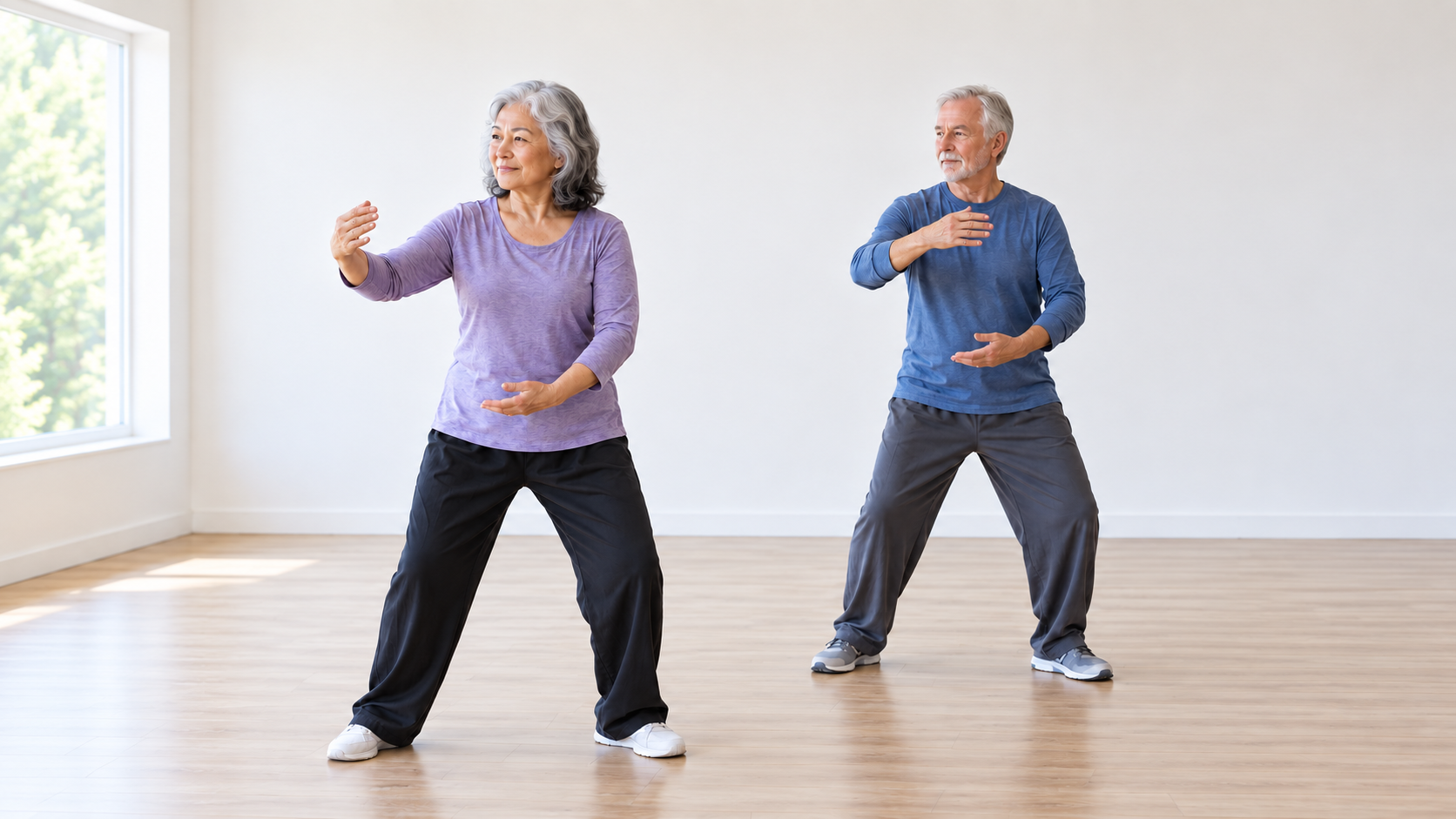
It's fall. You’ve been sitting at the kitchen table for a while. You rise, and the first few steps toward the sink feel stiff.
You’d like to move more, but it rains a lot, and an exercise class with deep bends and quick changes of direction doesn’t sound appealing.
Tai Chi may be worth exploring. It can be performed anywhere, even in your living room, and if you’ve ever watched a demonstration and thought, “My knees wouldn’t like that,” there’s something useful to know: different styles of Tai Chi ask different things of your body.
Finding a comfortable starting point begins with understanding those differences.
Chen, the oldest of the major Tai Chi styles, often combines slow movements with vigorous bursts and lower stances. Its complexity can appeal to someone who enjoys a physical challenge. Those demands may need considerable modification for someone with painful or stiff joints.
Yang, which developed from Chen, is widely practiced and known for slow, expansive movements. Yang brought Tai Chi to a broader audience. You may recognize its flowing arm movements and measured shifts of weight.
Sun style offers another approach. The youngest of the major styles, it generally uses a higher, more upright stance and distinctive “following steps.” These features help explain its appeal to many older adults.
Using Sun, a higher stance means less bending at the knees instead of lifting your feet high into the air.
With a following step, one foot moves and the other follows in the same direction. That keeps the movement flowing without requiring a long, stretched-out position.
Imagine standing in a clear space beside your kitchen table. An online instructor shows you a small step, then pauses while you find a comfortable position. You repeat it slowly, noticing where your weight settles and whether your shoulders have crept upward. There’s time to ask a question or make the movement smaller. You repeat this process for thirty minutes and end the lesson.
That’s a realistic way to begin.
Sun style emphasizes qigong: movement, breathing, and focused attention traditionally described as cultivating internal energy.
In practice, you might experience this as letting your breath settle while your hands gently open and close.
Sun style's upright posture and smaller steps can offer a useful starting point for adapting practice around joint limitations. But style alone doesn’t make it suitable for every person. Comfortable movement, thoughtful instruction, and adjustments matter more than how closely you copy a demonstration on YouTube.
Research suggests Tai Chi may help with knee osteoarthritis symptoms and support balance,. The National Center for Complementary and Integrative Health offers an overview. If you have significant pain, a recent injury, or serious balance difficulties, speak with a qualified healthcare professional before beginning.
You don’t need to commit a lot of time or learn a long, complicated sequence all at once. A few comfortable movements, practiced regularly and developed gradually, can give you something manageable to return to.
Contact Serenity Yoga & Tai Chi LLC to learn how personalized online lessons might help you find that starting point, with room to discuss your comfort, questions, and pace.
R